

Depression is not a one-size-fits-all condition. It can appear in different forms, each with its own set of symptoms, causes, and challenges. Understanding the different types of depression can help adults recognize what they may be experiencing and seek the right kind of support at the right time.
Below is a clear breakdown of the most common types of depressive disorders, explained in simple, easy-to-understand language.
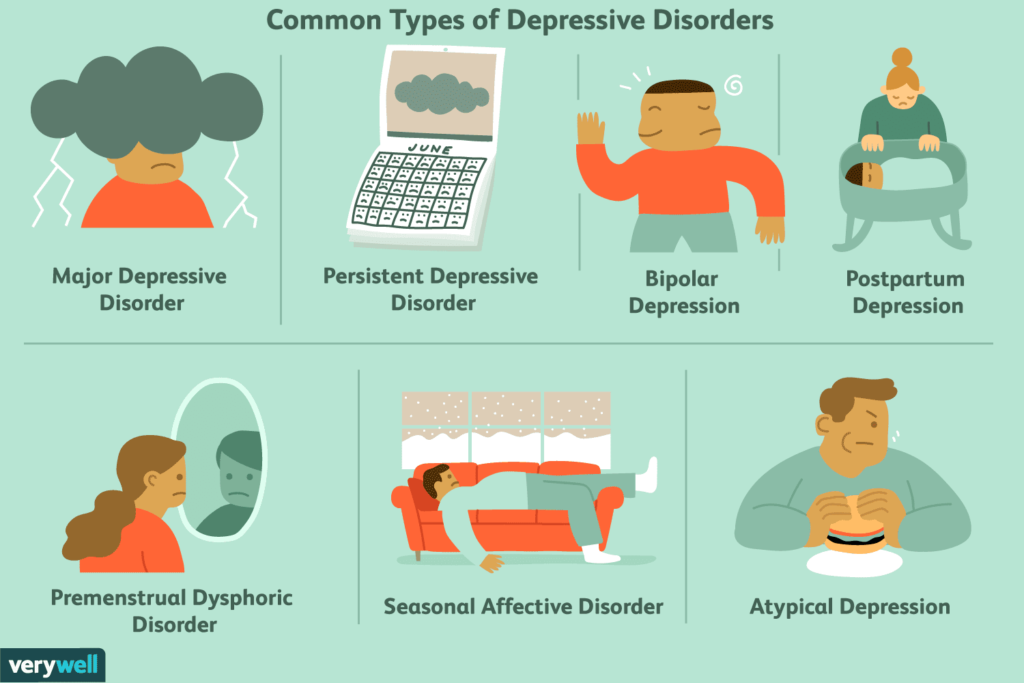
Source: Verywell / JR Bee
Major Depressive Disorder (MDD)
Major Depressive Disorder, often called clinical depression, is one of the most well-known forms of depression. It involves intense and persistent feelings of sadness, emptiness, or hopelessness that last for at least two weeks.
Common symptoms include:
- Loss of interest in daily activities
- Low energy and fatigue
- Changes in sleep or appetite
- Difficulty concentrating
- Feelings of worthlessness or guilt
MDD can significantly interfere with work, relationships, and daily functioning.
Persistent Depressive Disorder (Dysthymia)
Persistent Depressive Disorder is a long-term form of depression that lasts for two years or more. Symptoms are often less severe than major depression but are ongoing and chronic.
People with dysthymia may experience:
- Ongoing low mood
- Low self-esteem
- Feelings of hopelessness
- Reduced productivity
- Constant emotional fatigue
Because symptoms are long-lasting, many adults mistake this type of depression for their normal personality.
Seasonal Affective Disorder (SAD)
Seasonal Affective Disorder is linked to changes in seasons, most commonly occurring during fall and winter when daylight is limited.
Symptoms may include:
- Low energy
- Increased sleep
- Weight gain or carbohydrate cravings
- Social withdrawal
- Depressed mood during specific seasons
SAD often improves with seasonal changes, but professional support can help manage symptoms more effectively.
Postpartum Depression
Postpartum depression affects individuals after childbirth and goes beyond typical “baby blues.” It can occur weeks or even months after delivery.
Common signs include:
- Intense sadness or anxiety
- Difficulty bonding with the baby
- Mood swings
- Feelings of guilt or inadequacy
- Changes in sleep and appetite
Early recognition is important, as postpartum depression can impact both the parent and child.
Atypical Depression
Atypical depression includes symptoms that differ slightly from traditional depression patterns. Unlike other forms, mood may temporarily improve in response to positive events.
Key features include:
- Heavy feeling in arms or legs
- Increased appetite
- Oversleeping
- Sensitivity to rejection
- Mood reactivity
Despite the name, atypical depression is common and treatable.
Situational Depression (Adjustment Disorder)
Situational depression develops in response to a stressful life event such as job loss, divorce, grief, or major life changes.
Symptoms include:
- Sadness or hopelessness
- Difficulty coping
- Anxiety or emotional distress
- Trouble concentrating
Although symptoms are linked to a specific event, support is often helpful to prevent worsening mental health.
High-Functioning Depression
High-functioning depression is not an official diagnosis but describes individuals who appear successful and capable while experiencing internal emotional struggles.
Signs may include:
- Constant exhaustion
- Emotional numbness
- Perfectionism
- Internal sadness despite external success
Because symptoms are often hidden, this type of depression can go unnoticed for long periods.
Why Understanding the Types of Depression Matters
Recognizing the different types of depression helps individuals:
- Understand their symptoms more clearly
- Reduce self-blame or confusion
- Seek appropriate care and support
- Improve long-term emotional well-being
Each type of depression requires a thoughtful, personalized approach to care.
Final Thoughts
Depression can take many forms, and no two experiences are exactly the same. Whether symptoms are persistent, seasonal, situational, or hidden behind daily responsibilities, understanding the types of depression is an important step toward awareness and healing.
For those seeking flexible care options, Depression Treatment can provide accessible support from home, making it easier for adults to get help that fits their lifestyle and needs.
Start Your Depression Recovery Today
If you recognize any of these types of depression in yourself or a loved one, reaching out for support can make a real difference. Living Hope Behavioral and Mental Health Care is providing virtual depression treatment in Arizona and TX, making it easier to get help wherever you are. With compassionate, professional care available online, you can take the first step toward feeling better and more supported—get help today.


Finally found an app that does not lag when I am placing my daily tips. The layout is super intuitive and I love how they keep the promotions rolling. Customer support actually replied within minutes when I had a question about the deposit bonus. It is exactly what I needed for my evening sessions. beturfapp
The installation process was super easy and the app runs perfectly on my phone. Best way to play on the go for sure bingopattigamedownload