

There’s a particular kind of exhaustion that comes from anxiety.
You finally get into bed after a long day. The house is quiet. Your responsibilities are done for the moment. Then your mind starts working overtime. A conversation from earlier replays in your head. You remember a bill that needs attention. You wonder if you said the wrong thing in a meeting. Before long, you’re wide awake, mentally solving problems that don’t actually need solving at 2 a.m.
Many adults assume anxiety appears because they’re weak, overly emotional, or simply “bad at handling stress.” That isn’t what I typically see in practice. More often, anxiety develops because several factors gradually pile on top of each other until the nervous system begins staying on high alert.
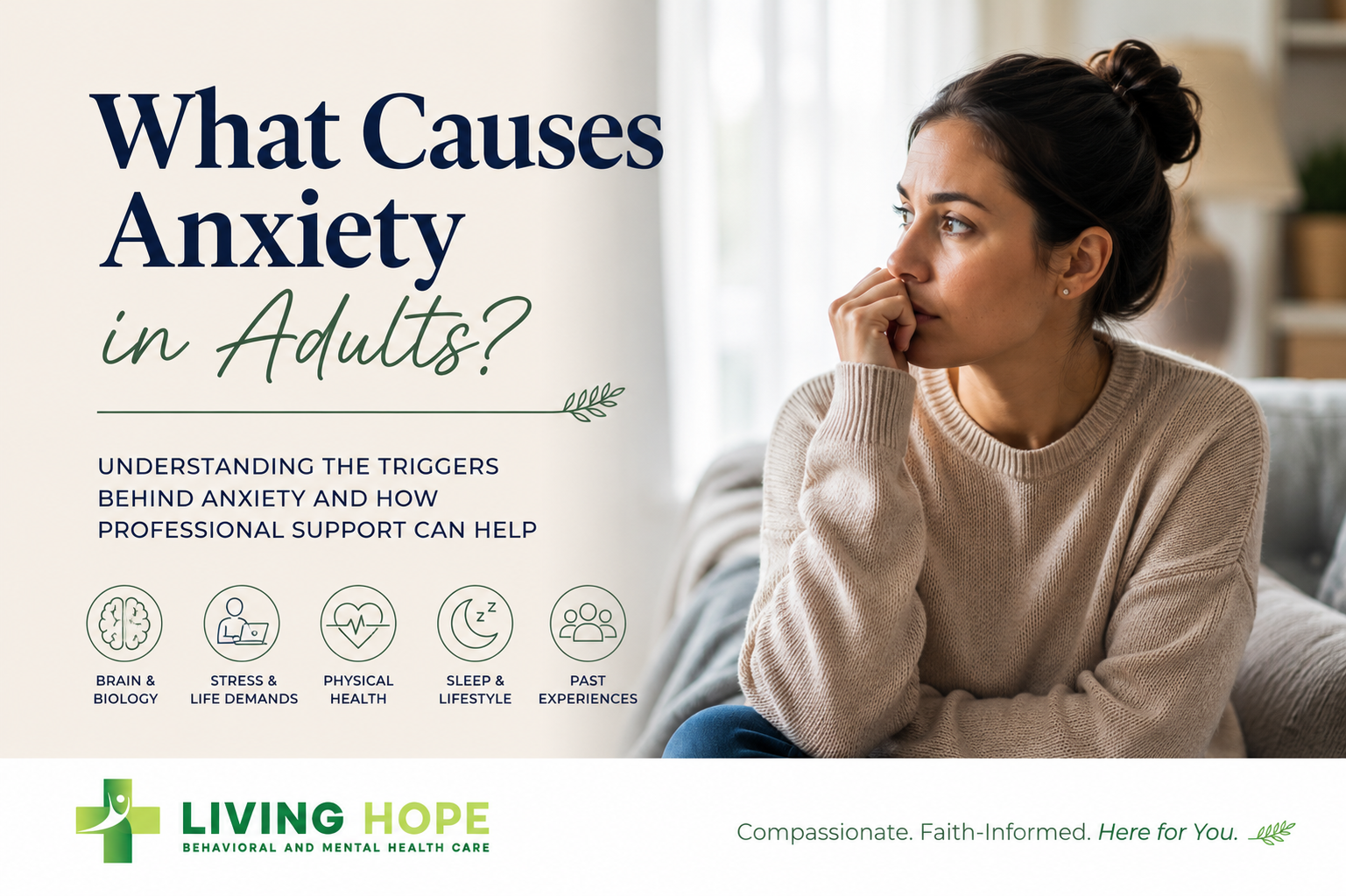
If you’ve been wondering about the causes of anxiety in adults, the answer is rarely as simple as one event or one trigger. Anxiety usually develops from a combination of biology, life circumstances, health factors, and learned patterns that interact over time.
Your brain is designed to notice threats
Anxiety starts with a system that is actually trying to help you.
The brain constantly scans for danger. Thousands of years ago, that response helped humans survive genuine threats. Today, the same alarm system can become activated by deadlines, financial pressure, relationship problems, health concerns, or uncertainty about the future.
When anxiety becomes persistent, the brain may begin interpreting ordinary situations as potential threats. An unanswered email can feel urgent. A minor physical symptom can trigger fears about serious illness. A routine presentation at work can create a level of distress that seems out of proportion to the situation itself.
Some people appear more vulnerable to anxiety than others. Genetics may play a role, and certain individuals naturally have more sensitive stress-response systems. That doesn’t mean anxiety is inevitable. It simply means some people start with a nervous system that reacts more strongly to stress.
Chronic stress has a bigger impact than most people realize
Sometimes people come looking for a single explanation for their anxiety, but what I often hear is a story that sounds more like this:
- Work has been demanding for months.
- A parent is dealing with health issues.
- Finances feel tighter than usual.
- Sleep has become inconsistent.
- There hasn’t been much time to rest or recharge.
None of those stressors alone may seem overwhelming. Together, they can place a tremendous strain on the mind and body.
Adults often carry responsibilities in multiple directions at once. They may be supporting children, helping aging parents, managing careers, maintaining relationships, and trying to keep up with daily obligations. Even positive life events, such as getting married, buying a home, or starting a new job, can increase stress levels.
Over time, chronic stress can leave the nervous system stuck in a state of heightened alertness, making anxiety symptoms more likely to appear.
Physical health can affect emotional health
One of the most overlooked causes of anxiety is an underlying medical issue.
People sometimes assume anxiety is entirely psychological, but physical health and mental health are closely connected. Certain medical conditions may contribute to anxiety symptoms or make existing anxiety feel worse.
Examples can include:
- Thyroid disorders
- Hormonal changes
- Heart conditions
- Chronic pain
- Respiratory conditions
- Blood sugar fluctuations
Even some medications can contribute to feelings of nervousness, restlessness, or increased anxiety. For example, many people are surprised to learn that medication-related anxiety can occur in some situations. We discuss this topic in more detail in our article about whether antibiotics can cause anxiety.
This is one reason a thorough evaluation matters. Looking only at emotional symptoms may miss part of the picture.
Sleep deprivation and anxiety often feed each other
Few things make anxiety worse faster than poor sleep.
After a night of limited rest, many people notice they feel more irritable, emotionally reactive, and overwhelmed. Small problems suddenly feel larger. Concentration becomes harder. Worry becomes easier.
Then anxiety itself makes it difficult to sleep.
A person lies awake reviewing tomorrow’s schedule, worrying about finances, or replaying interactions from the day. The less they sleep, the more anxious they feel. The more anxious they feel, the harder it becomes to sleep.
That cycle can continue for weeks or even months if it isn’t addressed.
Past experiences don’t always stay in the past
Not every source of anxiety is obvious.
Some adults experience anxiety that can be traced back to difficult experiences earlier in life. That doesn’t necessarily mean severe trauma. Sometimes it involves growing up in an unpredictable environment, experiencing significant criticism, living through a major loss, or spending years feeling responsible for everyone else’s needs.
The brain learns from experience. If someone spent years expecting problems, conflict, or disappointment, their nervous system may continue preparing for those outcomes long after circumstances have changed.
Many adults don’t connect those earlier experiences to their current anxiety because the events happened years ago. Yet the patterns learned during those experiences can remain active.
“My life is fine. Why am I still anxious?”
This is one of the most common questions I hear.
Someone may have a stable job, supportive relationships, and a relatively comfortable life. On paper, things look good. Yet they still experience racing thoughts, excessive worry, physical tension, or panic symptoms.
The reality is that anxiety doesn’t require a current crisis.
Anxiety can develop because of how the brain processes uncertainty. It can be influenced by genetics, accumulated stress, health factors, past experiences, or longstanding thought patterns. Sometimes people expect anxiety to disappear as soon as life improves, but the nervous system doesn’t always switch off automatically.
That’s why many adults feel confused by their symptoms. They keep looking for one major problem to explain everything when the answer is often more complex.
When does normal worry become an anxiety disorder?
Everyone worries occasionally.
The difference is the degree to which anxiety interferes with daily life.
You may benefit from a professional evaluation if anxiety:
- Occurs most days of the week
- Feels difficult to control
- Interferes with work, relationships, or daily responsibilities
- Causes sleep problems
- Leads to physical symptoms such as muscle tension, restlessness, or rapid heartbeat
- Causes you to avoid situations that were previously manageable
If those experiences sound familiar, learning more about our anxiety treatment services may be a helpful next step.
How anxiety is treated
Treatment depends on the individual and the factors contributing to their symptoms.
For some people, therapy-focused approaches are most helpful. Others benefit from a combination of therapy, lifestyle changes, and medication management. If medication is part of the conversation, understanding who can prescribe anxiety medication can help clarify available options.
One advantage of modern mental health care is that support doesn’t always require traveling to an office. Living Hope Behavioral and Mental Health Care provides virtual psychiatric care for adults throughout Arizona. If you’re curious about what that process looks like, you can learn more about how online anxiety treatment works.
If anxiety has become part of your everyday life
Many adults wait longer than they need to before seeking help. They assume they should be able to handle the anxiety on their own or that things will eventually settle down.
Sometimes they do.
Sometimes they don’t.
If anxiety has started affecting your sleep, concentration, relationships, work performance, or overall quality of life, it may be worth talking with a qualified mental health professional. A thoughtful evaluation can help identify what’s driving the anxiety and what treatment options may fit your situation.
For adults living in Arizona who would like professional guidance, you can schedule an appointment with Living Hope Behavioral and Mental Health Care to discuss your concerns and explore possible next steps.